


Marbella,
before the coast.
Whitewashed lanes, orange trees in the square and the beach eight minutes downhill: this is the Marbella our guests walk out into every morning.
A thousand years, on foot.
Antiquity
The coast before the town
Romans farmed and traded along this shore long before there was a Marbella: the villa at Río Verde kept its mosaics, and the baths at Guadalmina still stand by the beach. The hill the Old Town sits on was chosen later, for the reasons it is pleasant now: high enough to catch the air, close enough to the sea.
10th century
Marbil-la and the walls
Under the Caliphate of Córdoba the town got its castle, its walls and the plan the lanes still follow. Stretches of that wall survive around the castle, and one of our houses is built against it. Casa del Castillo is not a name chosen for effect.

1485
A square for the new town
On 11 June 1485 Marbella passed to the Catholic Monarchs without a siege. The new rulers laid out the Plaza de los Naranjos beside the old town as a Castilian square, with the Ermita de Santiago already on it and the Town Hall to follow in 1568. The orange trees came later; the plan did not change.
16th and 17th centuries
Hospital, church, fountain
The town filled in around the square: the fountain of 1504; the Hospital Bazán, a Renaissance house that is now the Museo del Grabado; and from 1618 the Iglesia de la Encarnación, raised where the mosque had stood, whose tower is still the tallest thing in the Old Town.

1826
Iron from the Sierra Blanca
For a few decades Marbella was an industrial town. The first modern blast furnaces in Spain were lit at La Concepción in 1826, fed with ore from the hills behind the town. They went cold by the middle of the century, and the town went back to fishing, farming and the sea.
1954
The coast arrives
The Marbella Club opened in 1954 and the shoreline was never the same. The Old Town was: its lanes were too narrow for the new Marbella, so it was left alone, then pedestrianised, then looked after. It is why you can still sleep in a house here that has been standing far longer than the coast has been famous.

Where the houses sit
What we tell our guests, one tip per house
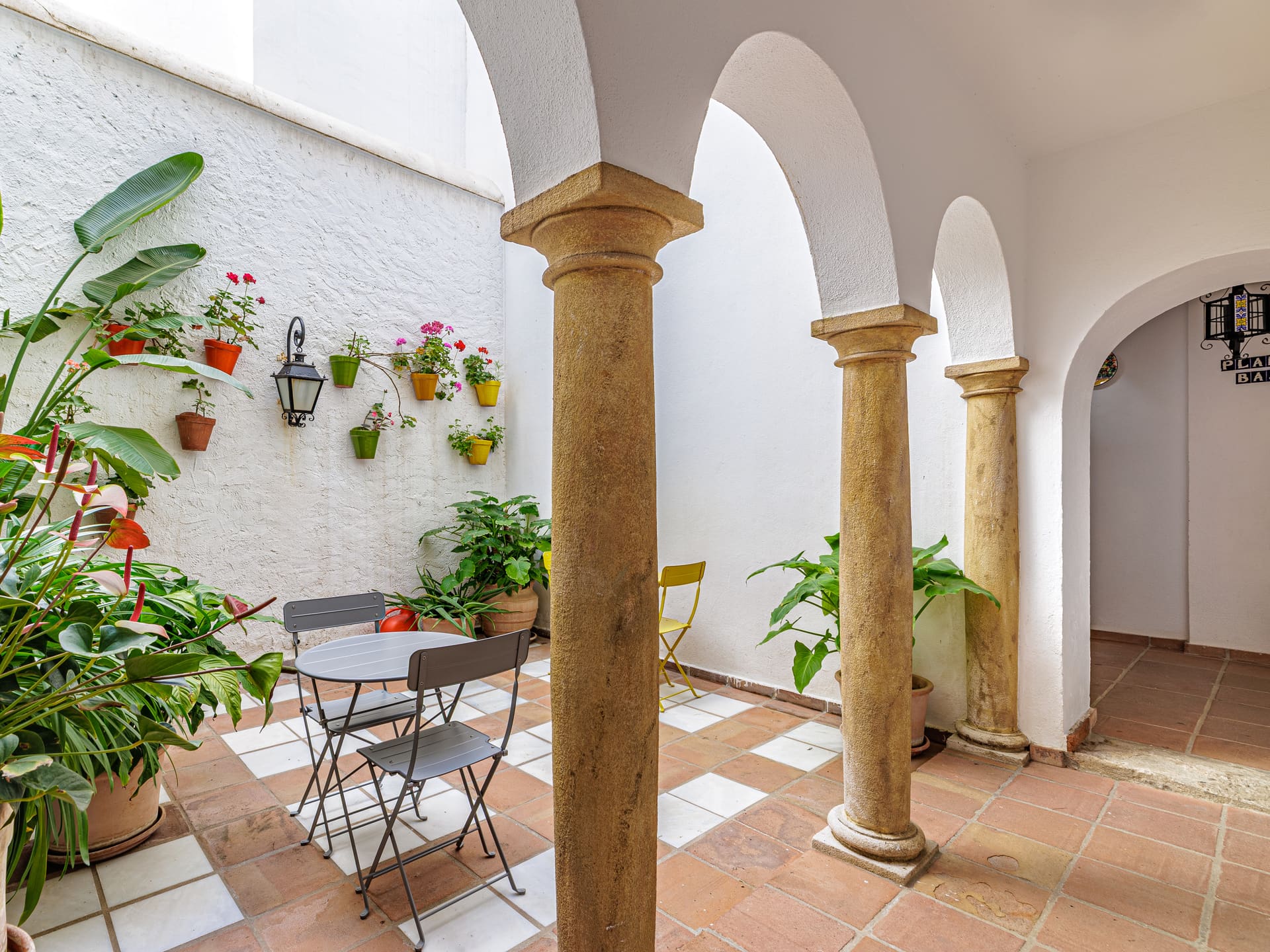
Casa Castillo
Walk the full length of the remaining city wall in the morning before the day-trippers arrive. It takes fifteen minutes and most visitors never do it. The views from the old fortification are the best free view in Marbella.
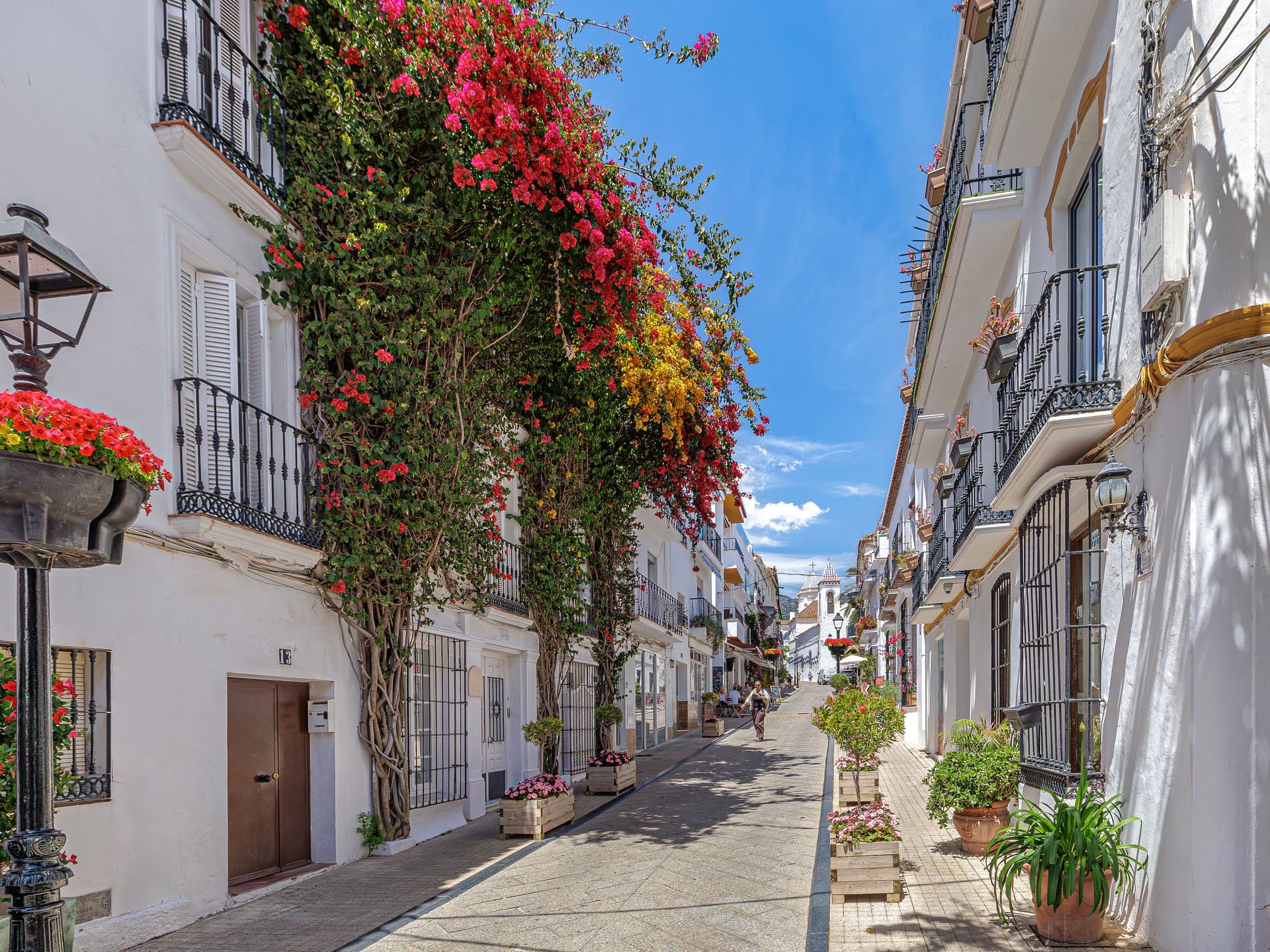
Casa Ancha 10
The Santo Cristo chapel at the end of Calle Ancha: 15th century, blue-tiled belfry, quiet fountain square. Two minutes from the door, almost always empty. Worth finding on your first evening.
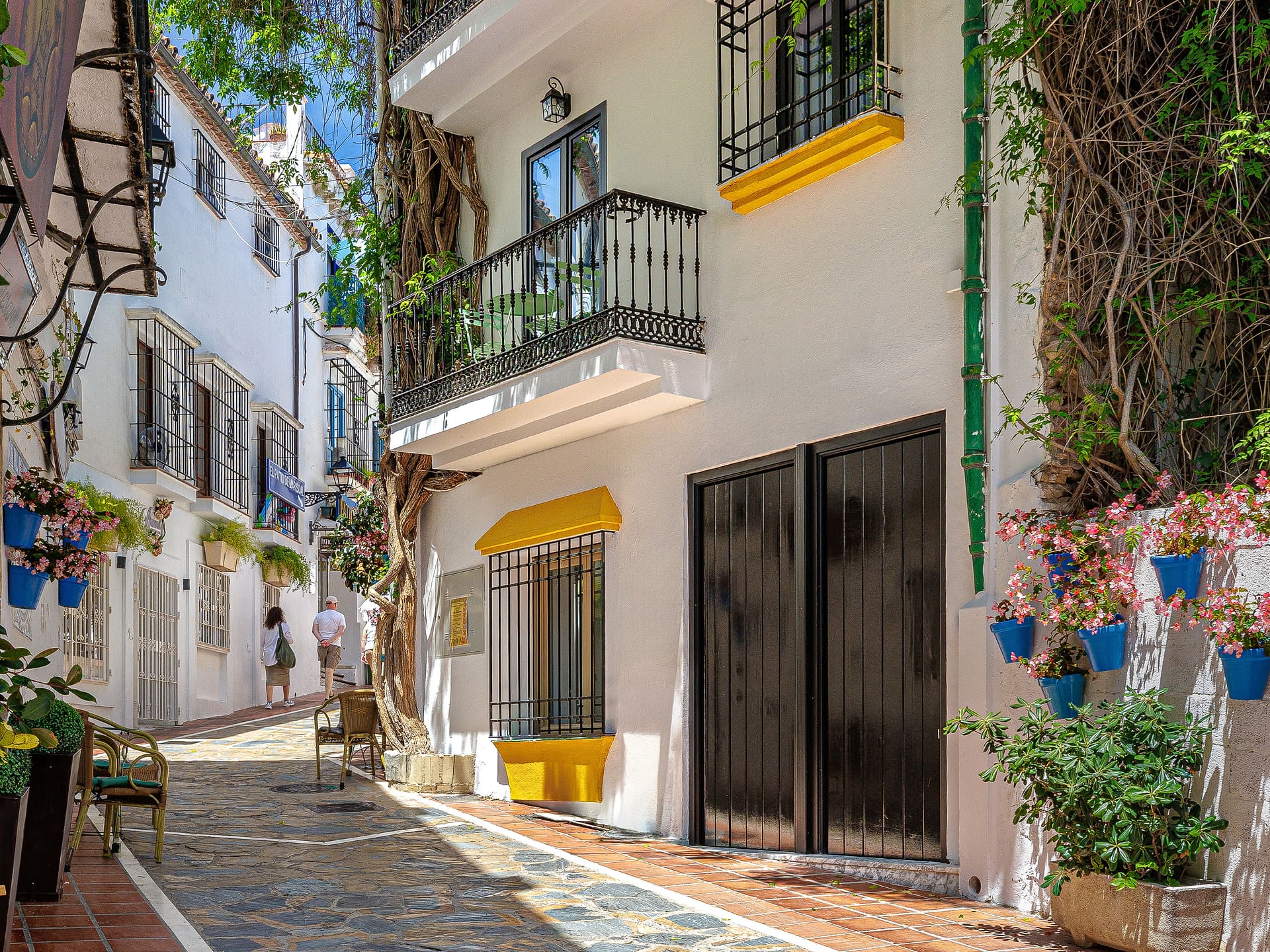
Ortiz Casa de las Plantas
The small square at the top of Calle Ortiz has a bench under an orange tree where locals sit in the mornings. Worth finding on your first day: it feels like it belongs to another century.
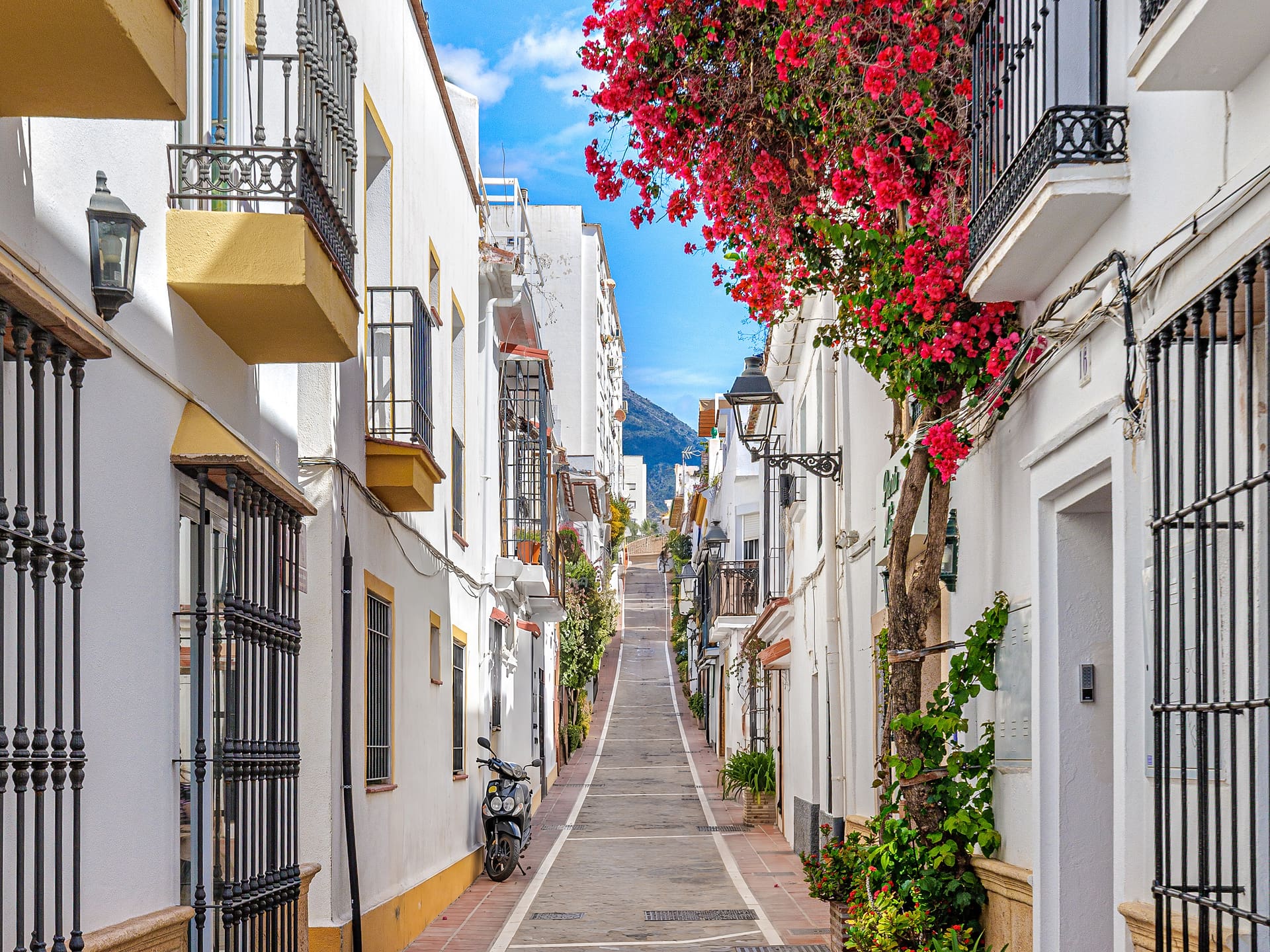
Casa Aduar 16
Casa Cielo: sunrise from the terrace on a clear morning, with the mountains turning pink. Set your alarm once. Casa Serena: the bakery two doors down opens at 7:30am on weekend mornings, and makes the best churros on the street.
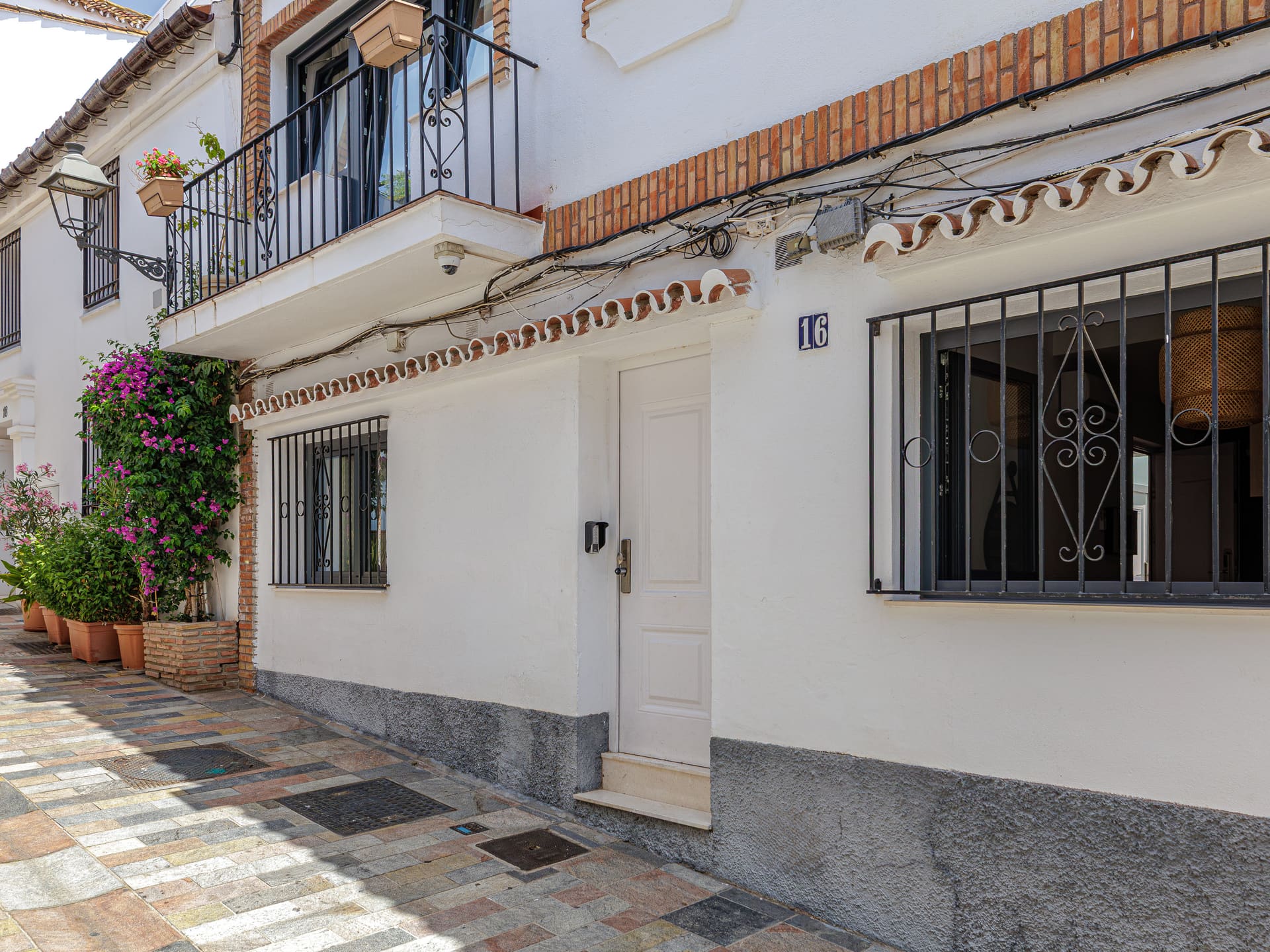
Bermeja Village
The Mercado Municipal on Avenida del Mar: fresh produce, local cheese, fish from the coast. Open Tuesday to Saturday mornings. Worth visiting on your first day to stock the kitchen.
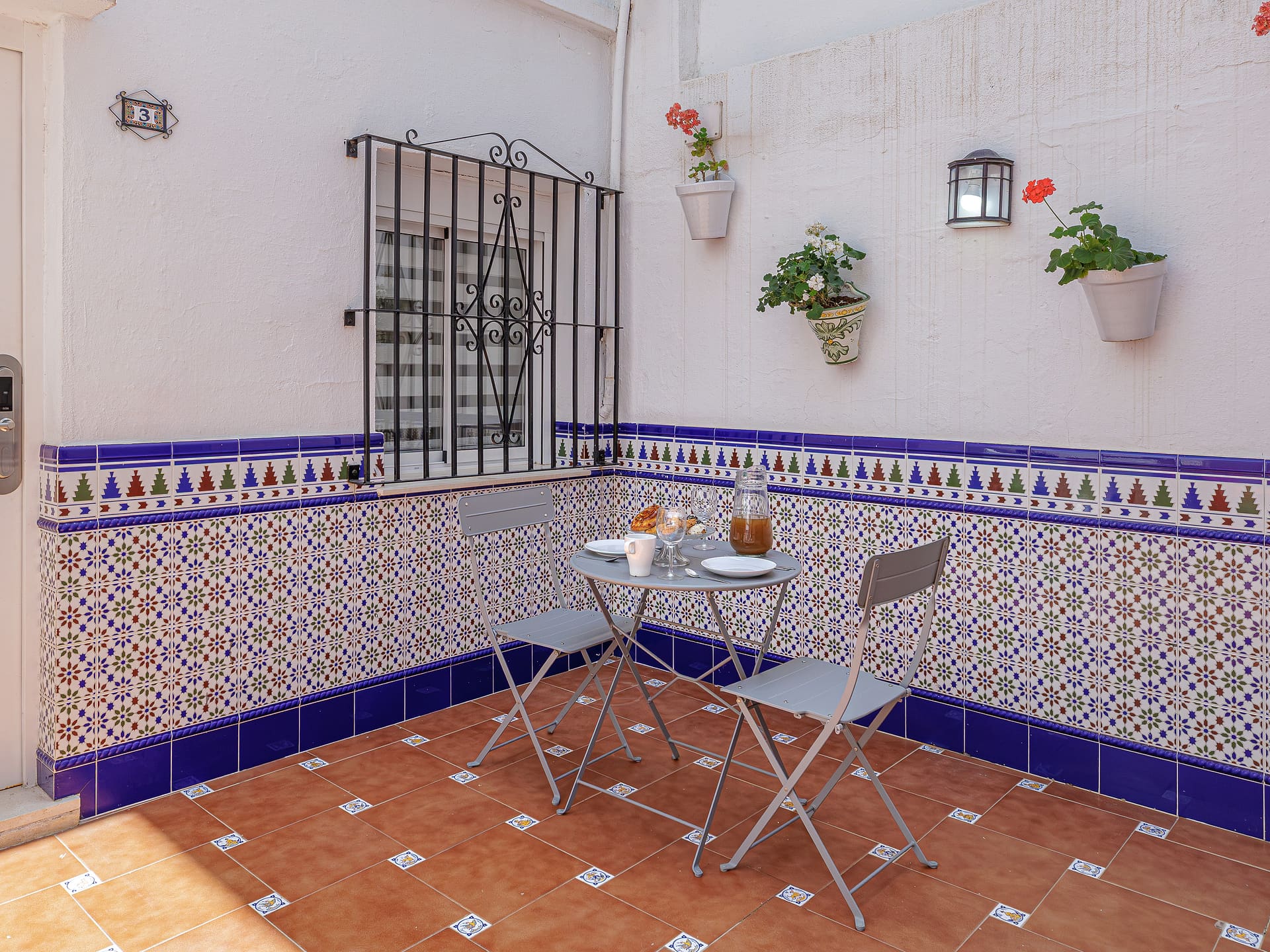
Escuela Village
The Museo del Grabado is fifty metres from the front door: rotating exhibitions of contemporary Spanish printmaking in a beautifully converted 16th-century hospital. Free on Sundays and almost always empty.
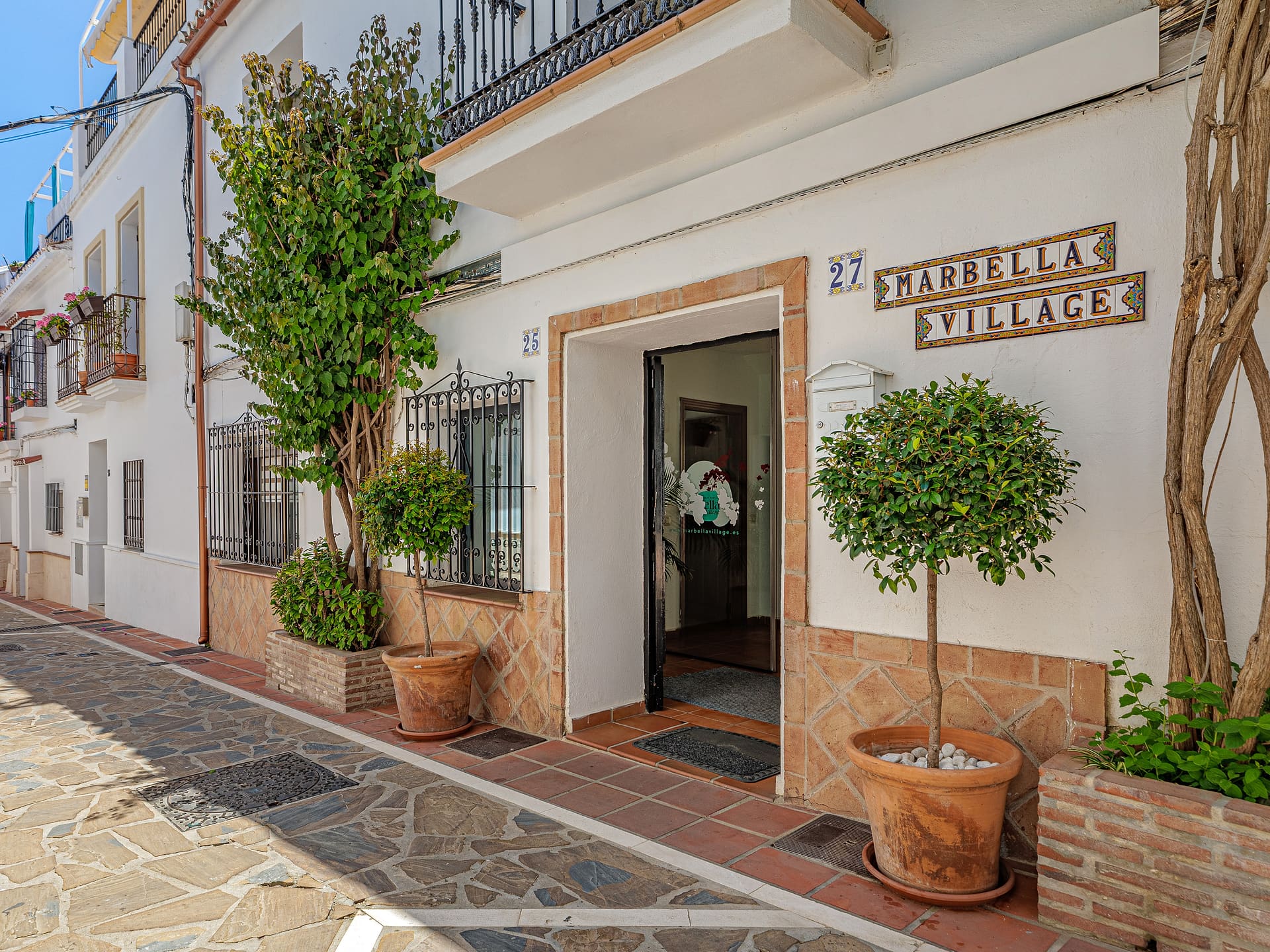
Marbella Village
Take your morning coffee up to the roof terrace before the town wakes: old town rooftops in every direction, and the patio still quiet below.


The Old Town is pedestrianised. Beach: 8 minutes on foot. Plaza de los Naranjos: 3 to 5 minutes from every house. Taxis at the Alameda. Puerto Banús: 15 minutes by taxi. Málaga Airport: 40 minutes by car. Paid car parks within 3 minutes; details in your pre-arrival message.
Self check-in with a code sent the day before. Check-in from 3pm, check-out by 11am. Reception at Calle Aduar until 6pm, security 24 hours. No parties, no smoking indoors.