
Easter Week in Marbella 2026 is one of the most atmospheric times of the year in the city. As evening falls across the Old Town, narrow streets fill with the sound of slow drum rhythms, brass bands, and candlelight moving through historic squares. Incense drifts through the air while locals and visitors gather quietly along the streets, waiting for the next procession to appear.
Semana Santa in Marbella takes place from March 29 to April 5, transforming the historic centre into the heart of the city’s cultural and religious traditions. While the exact dates change each year, Semana Santa in Marbella usually falls between late March and early April, bringing a week of processions, ceremonies, and community gatherings that reveal a deeper side of Andalusian culture.
For travellers staying in Marbella Old Town, the experience feels particularly immersive. Many of the most meaningful moments happen in the historic centre itself, where narrow streets open suddenly into traditional plazas.
Many of the Semana Santa routes pass through the historic centre near Calle Aduar, allowing visitors staying in Marbella Village apartments to experience the processions just steps from their door.
This guide explores the most important processions of Easter Week in Marbella 2026, the best places to watch them near the Old Town, and practical tips for experiencing Semana Santa like a local.
Easter Week in Marbella 2026 – Key Dates
- Palm Sunday: March 29, 2026
- Holy Tuesday: March 31, 2026
- Holy Wednesday: April 1, 2026
- Holy Thursday: April 2, 2026
- Good Friday: April 3, 2026
- Easter Sunday: April 5, 2026
These days form the core of Semana Santa Marbella, when the most important processions move through the historic centre.
What Is Semana Santa in Marbella?
Semana Santa, or Holy Week, commemorates the final days of Jesus Christ’s life and resurrection. Across Andalusia it is marked by solemn religious processions organized by local brotherhoods known as cofradías.
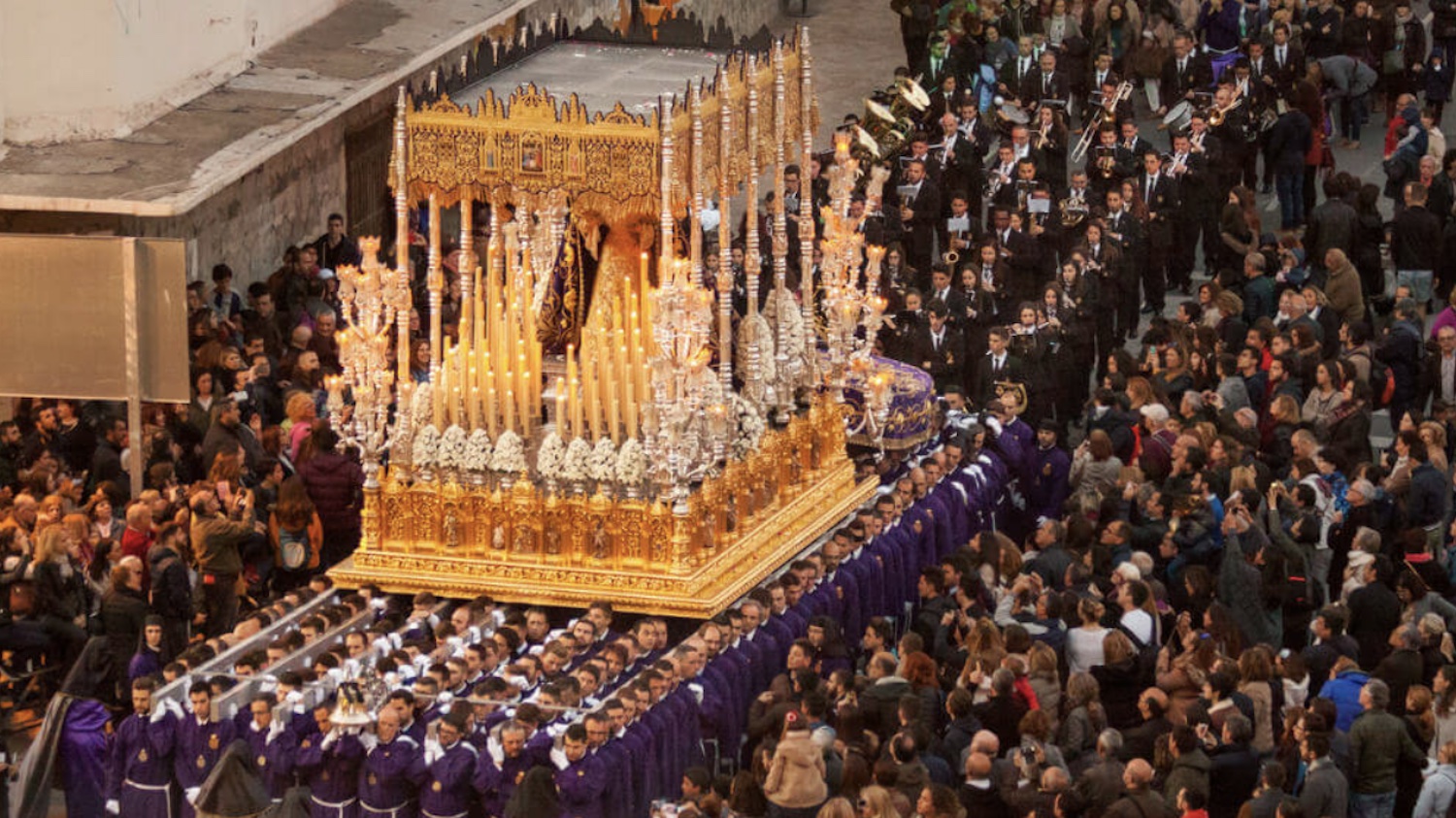
Each procession carries elaborate religious floats called pasos, accompanied by music, candles, and participants dressed in traditional robes. These processions move slowly through the streets, often taking several hours to complete a route through the historic centre.
Although rooted in religious tradition, Semana Santa today is also one of the most important cultural events in southern Spain. Visitors attend not only for spiritual reasons but also to experience the historic atmosphere, artistry, and symbolism that define the celebration.
In Marbella, often referred to simply as “Semana Santa Marbella,” the celebration transforms the Old Town into the heart of the city’s traditions. Many of the most atmospheric Semana Santa Marbella Old Town processions take place around Plaza de la Iglesia and the surrounding historic streets.
The Meaning Behind the Nazarenos’ Robes
One of the most striking sights during Semana Santa in Marbella is the long line of nazarenos, participants who walk in the processions wearing traditional robes and tall pointed hoods known as capirotes.
These garments are part of a centuries-old Catholic tradition symbolizing penitence, humility, and devotion. Historically, the hood allowed participants to perform acts of penance anonymously, emphasizing spiritual reflection rather than individual identity.
For visitors unfamiliar with Spanish Holy Week, the pointed shape can sometimes be surprising. However, its meaning is purely religious and deeply rooted in Andalusian culture. Each brotherhood has its own colors and robes, creating a moving procession of fabrics, candles, and symbols that slowly pass through Marbella’s historic streets.
Palm Sunday – La Pollinica
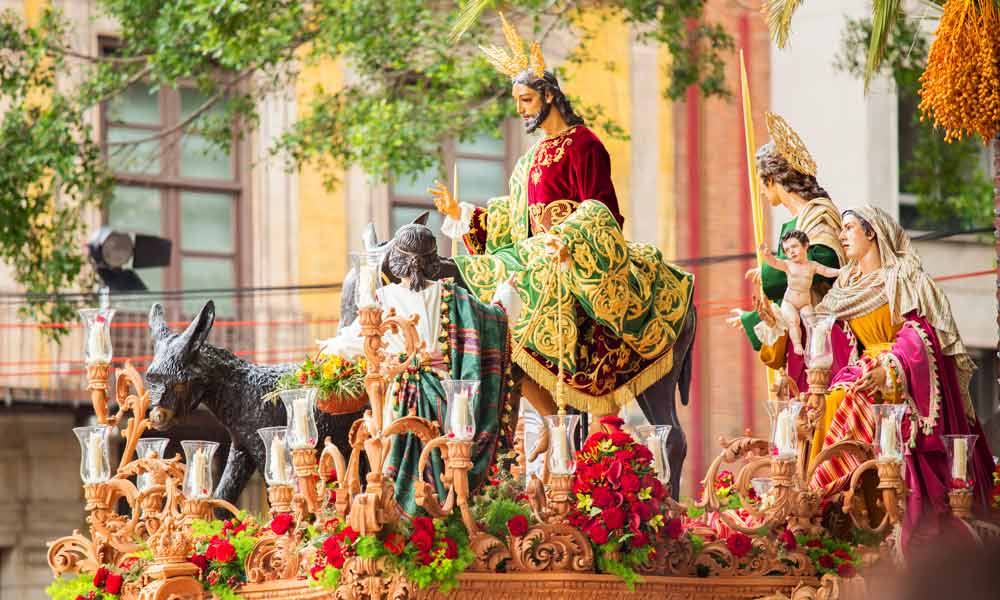
Palm Sunday marks the official beginning of Easter Week in Marbella 2026, and one of the most recognizable processions is La Pollinica.
This procession traditionally begins in the afternoon and commemorates Jesus’ arrival in Jerusalem. The atmosphere on Palm Sunday feels welcoming and celebratory, making it an excellent first introduction to Semana Santa for visitors.
Watching the procession as it moves through the Old Town offers a powerful visual contrast: ancient streets, traditional robes, and music echoing between whitewashed buildings.
Holy Monday – A Quieter Day in the Old Town
Holy Monday is usually one of the quieter days during Semana Santa in Marbella. Rather than large processions, the day offers a slower rhythm — making it a perfect opportunity to explore the historic centre.
Visitors often spend the day discovering local culture, relaxing in cafés, or walking through Marbella’s historic streets before the next evening processions begin later in the week.
It is also a great moment to discover some of the 25 Free (or Almost Free) Things to Do in Marbella, especially if you want to explore the Old Town at a relaxed pace.
Holy Tuesday – Cautivo and Santa Marta
Holy Tuesday brings one of the most atmospheric evening processions of the week: Cautivo and Santa Marta.
This procession often begins later in the evening, when candlelight and music create a more solemn atmosphere throughout the Old Town. Watching the procession pass through narrow streets allows spectators to experience the ceremony up close.
Before or after the procession, many visitors enjoy wandering through the historic centre and stopping for something sweet — a perfect moment to explore the Best Ice Cream Shops in Marbella Old Town while enjoying the festive atmosphere.
Holy Wednesday and Holy Thursday – Nazareno
By the middle of the week, the emotional intensity of Semana Santa becomes more pronounced.
The Nazareno procession, typically held on Wednesday evening, is one of the most important events in the Semana Santa calendar. The solemn pace, candlelit streets, and music create a powerful atmosphere throughout Marbella’s historic centre.
Photographers and visitors often find these evenings particularly memorable. The combination of historic architecture, traditional costumes, and flickering candlelight creates some of the most striking scenes of the entire week.
Holy Thursday – Calvario, Amor and Vera Cruz
Holy Thursday is often one of the busiest nights of Semana Santa in Marbella.
Multiple processions pass through the Old Town, including Calvario, Cristo del Amor, and Vera Cruz. As these processions move through the historic centre, spectators gather in plazas and narrow streets to witness the ceremonial procession of religious floats carried by costaleros.
One of the curiosities of Semana Santa is the slow pace of these processions. The heavy pasos are carried on the shoulders of dozens of participants who walk in synchronized steps beneath the structure.
Good Friday – The Most Solemn Day of the Week
Good Friday commemorates the crucifixion of Jesus Christ and is traditionally the most solemn day of Semana Santa.
In Marbella, the Good Friday processions carry a deeper sense of reflection and silence. Music becomes slower, the atmosphere more contemplative, and spectators observe quietly as the processions pass.
Even for visitors who are not religious, the experience can feel deeply moving and culturally significant.
Easter Sunday – Resurrection Procession
Easter Sunday marks the joyful conclusion of Semana Santa.
The Resurrection procession celebrates the resurrection of Christ and often takes place in the morning. After several days of solemn ceremonies, the atmosphere becomes brighter and more celebratory.
For many visitors, Easter Sunday offers the perfect final moment to experience the traditions of Semana Santa before enjoying a relaxed lunch in the Old Town.
Best Places to Watch the Processions in Marbella Old Town
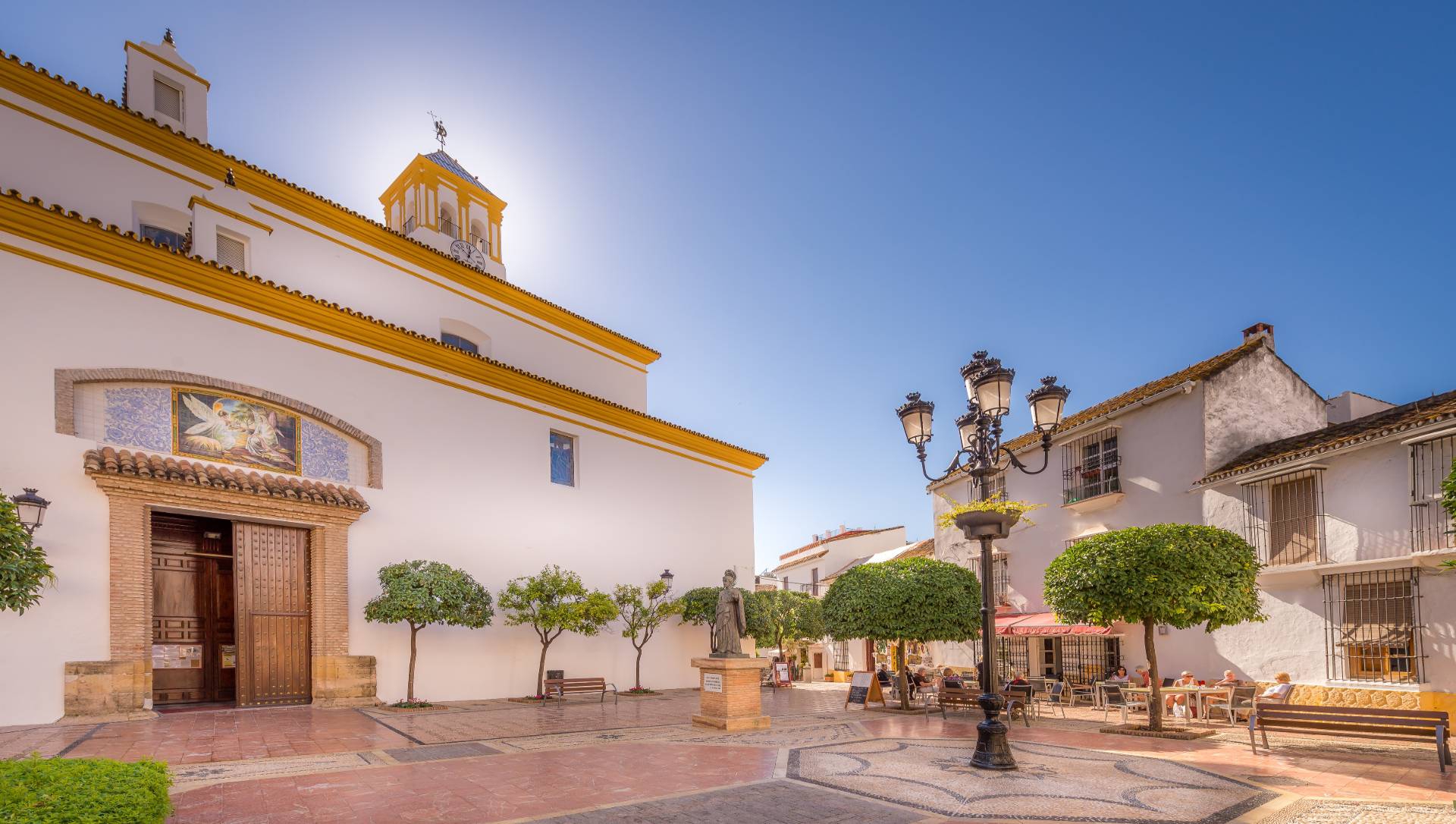
Some of the most memorable viewing spots are located within Marbella’s historic centre.
Many visitors gather near Plaza de la Iglesia, where several processions begin or end, while Plaza de los Naranjos offers a beautiful setting surrounded by historic buildings. The narrow streets around Calle Ancha and nearby lanes of the Old Town often provide the most intimate experience. Visitors who want additional information about cultural events and the historic centre can also consult the official Marbella tourism website.
Many of the key procession routes pass through the historic centre of Marbella, meaning that visitors staying near Calle Aduar are already within a short walk of several viewing points.
Suggested Easter Week Plan for Visitors Staying in Marbella Old Town
A simple way to experience Semana Santa is to structure your week around the main events.
Palm Sunday introduces the celebrations with La Pollinica. Holy Monday allows time to explore Marbella at a slower pace. Holy Tuesday and Wednesday bring atmospheric evening processions, while Holy Thursday and Good Friday represent the emotional peak of the week.
During the day, visitors often combine the celebrations with other Marbella experiences. Many travellers spend the afternoon discovering the 25 Free Things to do in Marbella Old Town before returning to the historic centre for the evening processions.
Sunset can also be a beautiful moment before the processions begin, especially if you explore the TOP 5 Perfect Sunset Spots in Marbella nearby.
Practical Tips for Enjoying Semana Santa
Arrive early if you want a good viewing spot, especially on Holy Thursday and Good Friday when the Old Town becomes busier.
Wear comfortable shoes. Semana Santa involves standing and walking through the historic centre.
Be flexible with dining plans. Restaurants can become busy during the evening processions.
Respect the atmosphere. Although many visitors attend for cultural reasons, the processions remain important religious traditions for local residents.
FAQ – Semana Santa in Marbella
- When does Semana Santa take place in Marbella?
In 2026, Easter Week in Marbella runs from March 29 to April 5.
- Where are the best places to watch the processions?
The most atmospheric spots are around Plaza de la Iglesia, Plaza de los Naranjos, and Calle Ancha.
- Do you need tickets?
No. The processions take place in public streets.
- What time do processions usually start?
Most begin in the late afternoon or evening. Visitors can confirm schedules on the Official Semana Santa Marbella website.
- Is it suitable for non-religious visitors?
Yes. Many visitors attend Semana Santa as a cultural and historical experience.
Conclusion
During Easter Week, Marbella Old Town becomes one of the most atmospheric places to experience Andalusian traditions. Candlelit processions, historic streets, and ceremonial music create a unique cultural moment that feels both intimate and powerful.
If you would like to experience Semana Santa from the heart of the historic centre, explore our Studios and Apartments in Marbella Old Town.
For personalised recommendations or help planning your stay, feel free to Contact Us — we will be happy to help you enjoy Marbella during one of the most special weeks of the year.